
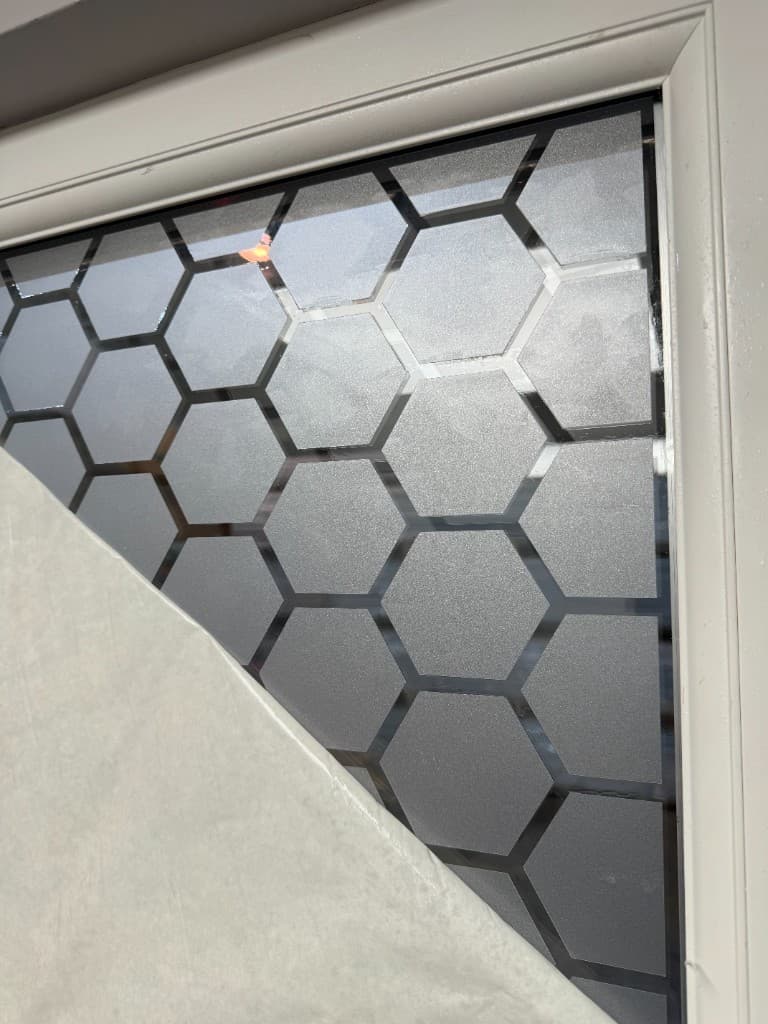
Window tinting for buildings across South Yorkshire — homes, offices and commercial premises
This page is for building window tinting only.
If you're looking for vehicle window tinting, we don't offer that service. For conservatories, homes, offices and commercial glazing — read on.
Building window tinting means applying a lightly or heavily tinted film to the interior of your glass — reducing the amount of solar heat coming in, cutting screen glare, blocking UV rays and adding a degree of privacy. It's one of the most cost-effective upgrades you can make to a south-facing office, an overheating conservatory, or a retail space where summer heat affects staff and customers.
WRPX installs tinted window film across South Yorkshire using 3M, Avery Dennison and Hexis commercial-grade products — specified for your glass type, orientation and purpose.
Four problems tinted window film solves
1. Overheating rooms and conservatories
South-facing rooms and glass-roofed conservatories can become unusable in summer without intervention. The right tinted film reduces solar heat gain by up to 79%, bringing rooms back into usable temperature ranges without air conditioning.
2. Screen glare in offices
Afternoon sun hitting monitor screens is one of the most complained-about workplace issues. A neutral density tinted film cuts glare without making the room feel dark, and without the eyesore of pulling blinds across half the day.
3. UV damage to furniture, floors and stock
UV radiation fades hardwood floors, carpets, upholstery and retail stock — often without anyone attributing the cause. Quality window film blocks up to 99% of UV while remaining clear or nearly so.
4. Privacy and solar combined
A lightly reflective tinted film gives you daytime privacy and solar control in a single product. Useful for street-facing commercial premises and ground-floor homes.
Where tinted window film gets installed
Conservatories: The most common residential installation. A glass conservatory without solar film can hit 40°C in July. Roof film and side film bring temperatures down to usable ranges and protect furniture from UV fade.
Offices and open-plan commercial spaces: South and west-facing offices lose productivity in afternoon sun. Tinted film is a permanent, low-cost fix compared to expensive blinds or HVAC upgrades.
Retail: Reducing solar gain protects products from UV and keeps customer-facing areas comfortable. A slightly reflective film also gives some display control.
Homes: Living rooms, kitchen-diners and bedrooms with large south-facing windows that get too hot in summer. Often more cost-effective than external shading solutions.
How we install it
Survey → film specification → preparation → application. The same four-step process we apply to every job. We don't just turn up and stick film on — we assess the glass orientation, the light conditions, the existing spec of the glass unit, and recommend the right product. A film that works well on clear single-skin glass may perform differently on a double-glazed low-E unit.
We use commercial-grade films only. Not the budget products available online. The difference in optical clarity, longevity and heat rejection is significant.
Window tinting questions — buildings
Will tinted window film make my room dark?
How much heat does window film actually reduce?
Is building window tinting legal?
Does it work on conservatory roof panels?
Can I remove tinted film later?
Overheating office, conservatory or home?
Book a free survey and we'll assess your glazing and recommend the right solution. No obligation. Across South Yorkshire.
Book Your Free Survey →